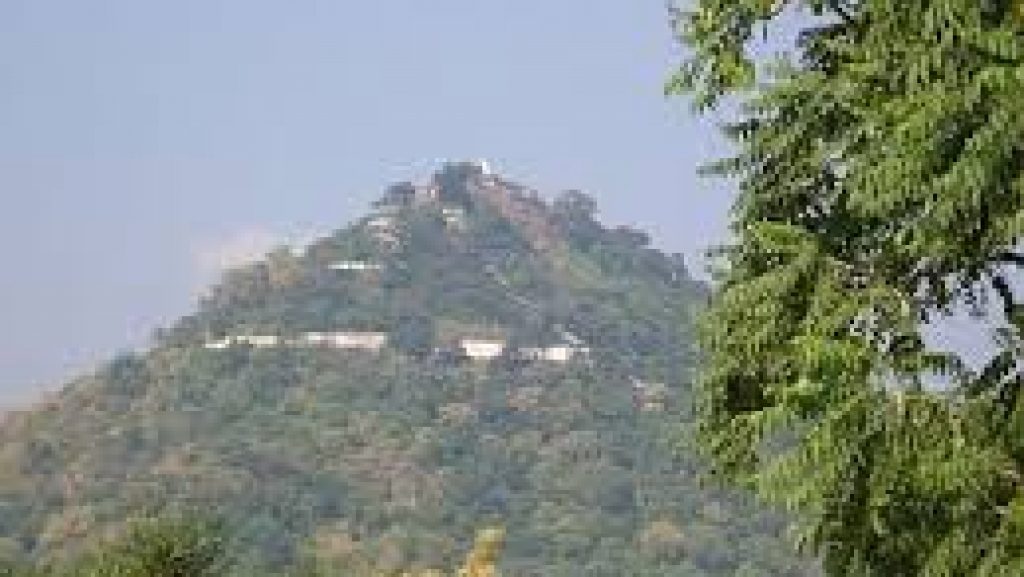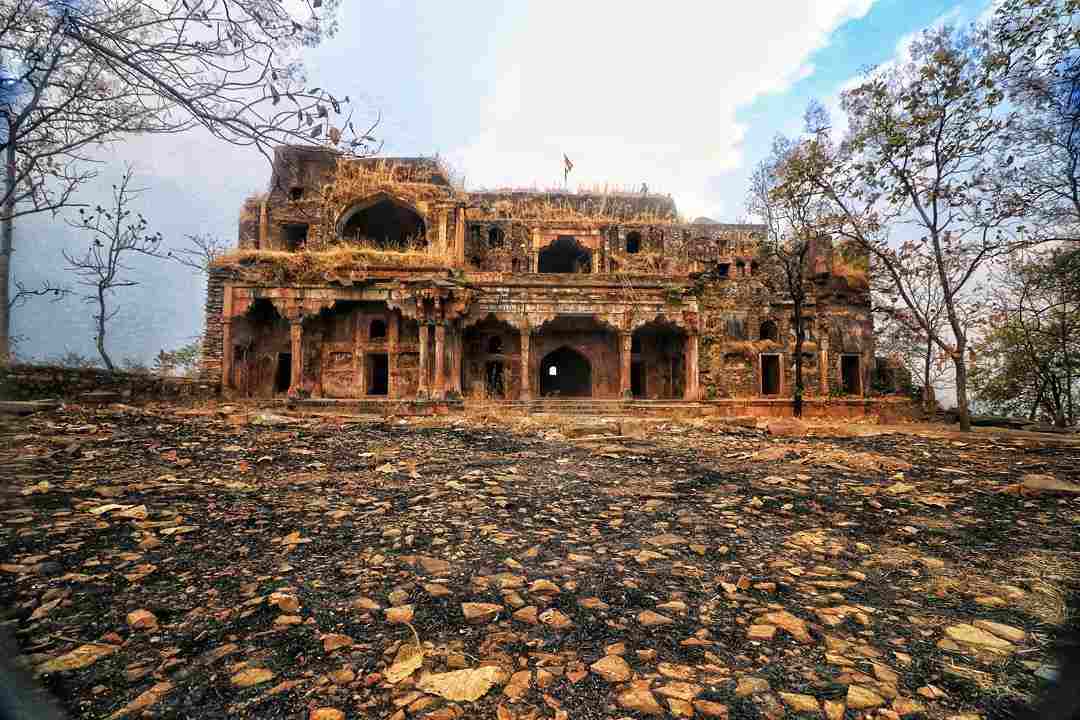

Most people who visit Bhopal come for the lakes, the Taj-ul-Masajid, or the grand Sanchi Stupa. But there is a place just 75 kilometres away — tucked inside dense forests along the edge of the Vindhya mountains — that holds a secret so old, so rare, and so quietly powerful that it changes the way you think about Indian history. It is called Saru Maru Caves. This is not just another cave. This is a place where Emperor Ashoka came on a date, where Buddhist monks meditated over 2,200 years ago, and where one of the rarest inscriptions in the entire Indian subcontinent was carved into rock by the emperor's own command. And yet, most people in Bhopal have never heard of it. That changes today. The Saru Maru Caves are an ancient Buddhist monastic complex located near the village of Pangoraria in Budhani Tehsil, Sehore District, Madhya Pradesh. The site sits approximately 120 km south of the famous Sanchi Stupa and about 25 km west of Narmadapuram (Hoshangabad). The complex includes: 45 rock shelters distributed across the hillside (discovered during excavation) 33 stupas spread over the surrounding hills Natural caves used by Buddhist monks for meditation and worship A maha-stupa (great stupa) nearly 76 metres in diameter with an ambulatory path Smaller stupas ranging from 2 to 16 metres in diameter Buddhist graffiti: the Swastika, Triratna (Three Jewels), and Kalasa (auspicious pot) Two inscriptions of Emperor Ashoka, carved in Brahmi script The caves are classified and protected as a centrally protected monument by the Archaeological Survey of India (ASI), Bhopal Circle. They are officially listed under the site name: Saru-Maru Monastic Complex. Locally, the most important cave is called "Saru Maru Ki Kothadi" — meaning "the room of Saru Maru." This is the main rock shelter where the most significant discovery was made: the two Ashokan inscriptions that put this site on the global archaeological map. The name "Saru Maru" itself comes from local tradition and has been used by villagers for generations. In scholarly literature, the site is also referred to as Panguraria or Pangudariyam. Here is the part of the story that will genuinely surprise you. One of the two inscriptions found inside the main cave — written in Prakrit language in Brahmi script — contains a royal announcement. Translated into English, it reads: "The king, who (now after consecration) is called 'Piyadasi', once came to this place for a pleasure tour while still a (ruling) prince, living together with his unwedded consort." — Commemorative Inscription of Ashoka, Saru Maru (Translated by Falk) Let that sink in. Before Ashoka became the emperor who renounced war and spread Buddhism across Asia, he was a young prince. He visited this forested, riverside spot in Madhya Pradesh — not on royal duty, but on a leisure trip with his girlfriend. That girlfriend was Devi (also called Vidishadevi) — the daughter of a merchant and banker from Ujjain. Other historical evidence confirms she later became the mother of two of Ashoka's children. They were not yet married when they came here together from Ujjain. This inscription is the only known record in the world where Ashoka describes a personal, pre-coronation visit to a site for leisure. It gives us a rare, completely human glimpse into the private life of one of India's most iconic rulers. The other inscription found at Saru Maru is a version of Minor Rock Edict No. 1 — one of the earliest formal edicts written by Ashoka after he became a Buddhist. Scholars categorise this as the 15th version of the same edict discovered across the subcontinent. What makes this version especially valuable? It contains important language and content differences from the 14 other versions found before the 1970s. Researchers use it to trace how written scripts and language evolved in ancient India. It is, in the words of archaeologists, an invaluable linguistic time capsule. The Saru Maru Caves were not known to modern archaeology until the 1970s. The site was discovered accidentally — not by foreign explorers, but by Indian archaeologists doing routine survey work. The formal excavation began in 1975–76 under K.D. Banerjee of the Prehistory Branch of the Archaeological Survey of India (ASI). The investigation revealed 45 rock shelters spread between Shahganj and the surrounding hills. Further exploration in 1976–77 uncovered the stupas, relics, and structural remains. Key findings from the excavation include: During the clearance of debris, Stupa No. 1 was fully exposed A stave and chhatra (ceremonial parasol) were found near the stupa — apparently disturbed by earlier looters trying to reach the relic casket The stave was octagonal in shape and bore an inscription recording a gift from a nun (bhikshuni) The chhatra was shaped like a lotus — a deeply Buddhist symbol The presence of a bhikshuni inscription led researcher Peter Skilling (writing in the Bulletin of the Asia Institute, 2011) to suggest there was an active community of Buddhist nuns at this site — a remarkable finding for 3rd century BCE India. The Ashokan inscriptions were edited and published in 1976 by scholar D.C. Sircar, and later appeared in his Ashokan Studies (1979). They are classified in Epigraphia Indica, Volume XXXIX. The caves are natural rock formations on the Vindhya hillside. The main shelter — Saru Maru Ki Kothadi — is where the Ashokan inscriptions are visible. The caves are believed to have been used by Buddhist monks as places of meditation and solitary worship, going back to the 3rd century BCE. They represent some of the earliest known examples of Buddhist rock-cut monastic architecture in central India. There are at minimum 33 identified stupas across the hills, with the most significant being a maha-stupa 76 metres in diameter — a massive structure by any historical standard. Twelve major stupas have been clearly identified in the vicinity of the main shelter. These range in diameter from 2 metres to 16 metres. The presence of such a large number of stupas indicates this was a well-funded, deeply revered Buddhist site that operated for over a millennium — from Ashoka's time (3rd century BCE) to approximately the 13th century CE. Inside the caves, you will find ancient graffiti carved into the rock walls. These include three of the most sacred symbols in Buddhism: Swastika — an ancient symbol of good fortune and well-being Triratna — representing the Three Jewels: Buddha, Dharma, and Sangha Kalasa — the sacred water pot, symbol of abundance and auspiciousness These carvings were made by monks and pilgrims who visited this place over centuries. The front of the site features a great stupa, with a clear walking path around it — known as a pradakshina path or ambulatory. Circumambulating (walking around) a stupa is a central practice in Buddhism, and the presence of this path confirms that this was a formal, active place of worship. About 10 km from the Saru Maru Caves is a natural waterfall that flows through the forest. This makes the trek even more rewarding — you combine ancient history with natural beauty in a single journey. The site is located on the southern slopes of the Vindhya mountains, in a region of dense forest, scenic valleys, and the nearby Narmada River to the south. Two large ancient mounds lie within 10 km — one believed to be the remains of the ancient city of Nemavati Nagari, and another known as Savatpur. Archaeological evidence from these mounds shows near-continuous human occupation from the Mauryan period to the Medieval Muslim era. The caves are located near the village of Pangoraria From the village, the caves are approximately 6 km on foot through dense forest The waterfall is a further 10 km from the caves The total trek is typically completed as a half-day activity The trek is of moderate difficulty — suitable for beginners who are reasonably fit. The path winds through thick jungle terrain, so proper footwear is essential. November to February is the ideal window. The weather is cool (15–25°C), the forests are green after the monsoon, and trekking conditions are comfortable. Avoid visiting during monsoon (July–September) as trails can be slippery and difficult. By Air: The nearest airport is Raja Bhoj Airport, Bhopal (BHO), about 75 km away. From the airport, hire a taxi or cab directly to Pangoraria. By Train: The nearest railway station is Budhni on the Bhopal–Itarsi railway line. Alternatively, reach Bhopal Junction (BPL) and drive from there. By Road: Take the Bhopal–Hoshangabad Road (NH 46) and turn toward Pangoraria via SH146B. The caves are roughly 75 km from Raja Bhoj Airport on this route. Bhopal to Sehore is approximately 45 km, and from there it is an easy drive to Pangoraria. By Bus: Local buses connect Bhopal to Sehore. From Sehore, shared autos or taxis go toward Budhani and Pangoraria. Entry Fee: No entry charges (ASI-protected monument, free to enter) Timings: The site is open during daylight hours. Visiting safely during the day is recommended. Approach by bus stop: Naktaloi The forests around Saru Maru are part of a rich, biodiverse ecosystem in the Satpura–Vindhya region of Madhya Pradesh. Visitors frequently encounter: Rare migratory birds — the area attracts birdwatchers, particularly during the winter months Sloth bears — the jungle is known sloth bear habitat Tigers — the broader Kerwa forest zone is tiger territory Various species of deer, langurs, and woodland birds This makes Saru Maru a unique destination that combines archaeological exploration with wildlife spotting — something very few places in India offer. Let these statistics tell the story: Many people ask — if I have visited Sanchi, why should I visit Saru Maru? Here is the honest answer: Sanchi is grand, world-famous, and a UNESCO World Heritage Site. Thousands of tourists visit every year. The restoration work is excellent and facilities are good. Saru Maru is raw, unrestored, and almost entirely untouched by mass tourism. But it holds something Sanchi does not: a personal inscription from Ashoka about his own private life. No other site in India has that. Saru Maru also has 45 natural rock shelters spread across a forested hillside — a more immersive, wilderness-like experience. For history lovers, Saru Maru is arguably the more emotionally powerful of the two. For adventure lovers, there is simply no competition. If you are planning a trip to Saru Maru, consider combining it with these nearby attractions: Sanchi Stupa (~120 km): UNESCO World Heritage Site, one of the finest Buddhist monuments in the world Bhojpur Temple (~40 km from Bhopal): Incomplete 11th-century Shiva temple with a massive shivalinga Narmadapuram (Hoshangabad) (~25 km): Sacred city on the Narmada River, rich in culture and ghats Kerwa Dam, Bhopal: Forest reservoir with rock climbing, rappelling (110 ft natural rock face), and zipline Satpura National Park (~100 km): One of India's finest wildlife parks — tiger safaris, jungle walks Go with a guide or organised trek group. Proper permissions from forest authorities are required to enter the forested trek zones. Agencies in Bhopal organise half-day and full-day packages. Carry enough water. The 6 km trek through dense forest has no shops or facilities. Carry at least 2 litres per person. Wear proper trekking shoes. The rocky forest terrain is uneven. Sneakers are okay; sandals are not. Start early. Begin your trek by 7–8 AM to finish before midday heat and to catch the best light inside the caves for photography. Do not litter. The site is ecologically sensitive. Carry your waste back out. Do not consume alcohol inside or near the caves. This is a protected and sacred site. Carry a torch/flashlight. Some cave interiors are dark. A headlamp is very useful. Respect the inscriptions. The Brahmi script inscriptions are 2,200+ years old. Do not touch, trace, or deface them under any circumstances. Breakfast and lunch are included in most organised trek packages from Bhopal. Mobile signal may be weak in the forest area. Download offline maps before you go. Bhopal is famous. But Saru Maru is extraordinary. Here is a place where you can stand inside the same rock shelter where one of history's most influential leaders once sat as a young man in love. Where Buddhist monks meditated in silence for over a thousand years. Where ancient symbols carved into rock walls have survived 23 centuries and two millennia of seasons. And where you still need to walk six kilometres through a forested hillside just to get there — which means the crowds will never come, and the magic will stay intact. Bhopal has given India many secrets. The lakes, the forts, the mosques. But Saru Maru is the secret that Bhopal has been holding quietly for the longest time. Now you know where it is.What Are the Saru Maru Caves?
The Story Behind the Name: Saru Maru Ki Kothadi
The Ashoka Connection: When India's Greatest Emperor Came Here on a Date
The Second Inscription
The Discovery: How a Forgotten Forest Revealed Its Secrets
What You Will See at Saru Maru: A Complete Guide
1. The Rock Shelters and Caves
2. The Stupas
3. Buddhist Graffiti
4. The Maha-Stupa and Ambulatory Path
5. The Waterfall
6. The Surrounding Landscape
The Trek to Saru Maru: Everything You Need to Know
Distance and Trail
Difficulty Level
Best Time to Visit Saru Maru Caves
How to Reach Saru Maru Caves
Entry Fee and Timings
Wildlife and Nature Around Saru Maru
Why Saru Maru Matters: The Historical Significance in Numbers
Saru Maru vs. Sanchi: How Are They Different?
Nearby Places to Visit
Practical Travel Tips for Saru Maru Caves
The Bottom Line: Why Saru Maru is Bhopal's Best Kept Secret