
Discover why the teak forests near Bhopal are becoming a secret haven for birders — and how you can start your own birdwatching journey today.
Have you ever stood still in a forest, so quiet that you could hear the soft rustle of wings above you? That moment — when a flash of white streaks through the canopy and you realise you've just spotted the legendary Dudhraj — is when birdwatching stops being a hobby and becomes something closer to magic.
Central India, often called the "Heart of India," is famous for its tigers. But here's what most travellers miss: the same forests that shelter these big cats are home to over 1,300 bird species, making India one of the world's richest destinations for birdwatching. And right here, barely an hour from Bhopal, lies Ratapani — a forest that holds more than 150 bird species waiting to be discovered.
Whether you're picking up binoculars for the first time or you've been chasing birds across continents, this guide will show you exactly how to experience birdwatching in Central India through the lens of Ratapani's pristine teak forests.
Why Central India is a Hidden Gem for Birdwatching
When birders plan trips to India, they often think of Bharatpur's wetlands or the Himalayan foothills. But Central India — particularly Madhya Pradesh — deserves far more attention than it gets.
Here's why the region stands out:
Madhya Pradesh alone has over 58,700 square kilometres of reserved forests. That's more protected forest cover than many entire countries. These expansive green belts create ideal habitats for both resident and migratory birds.
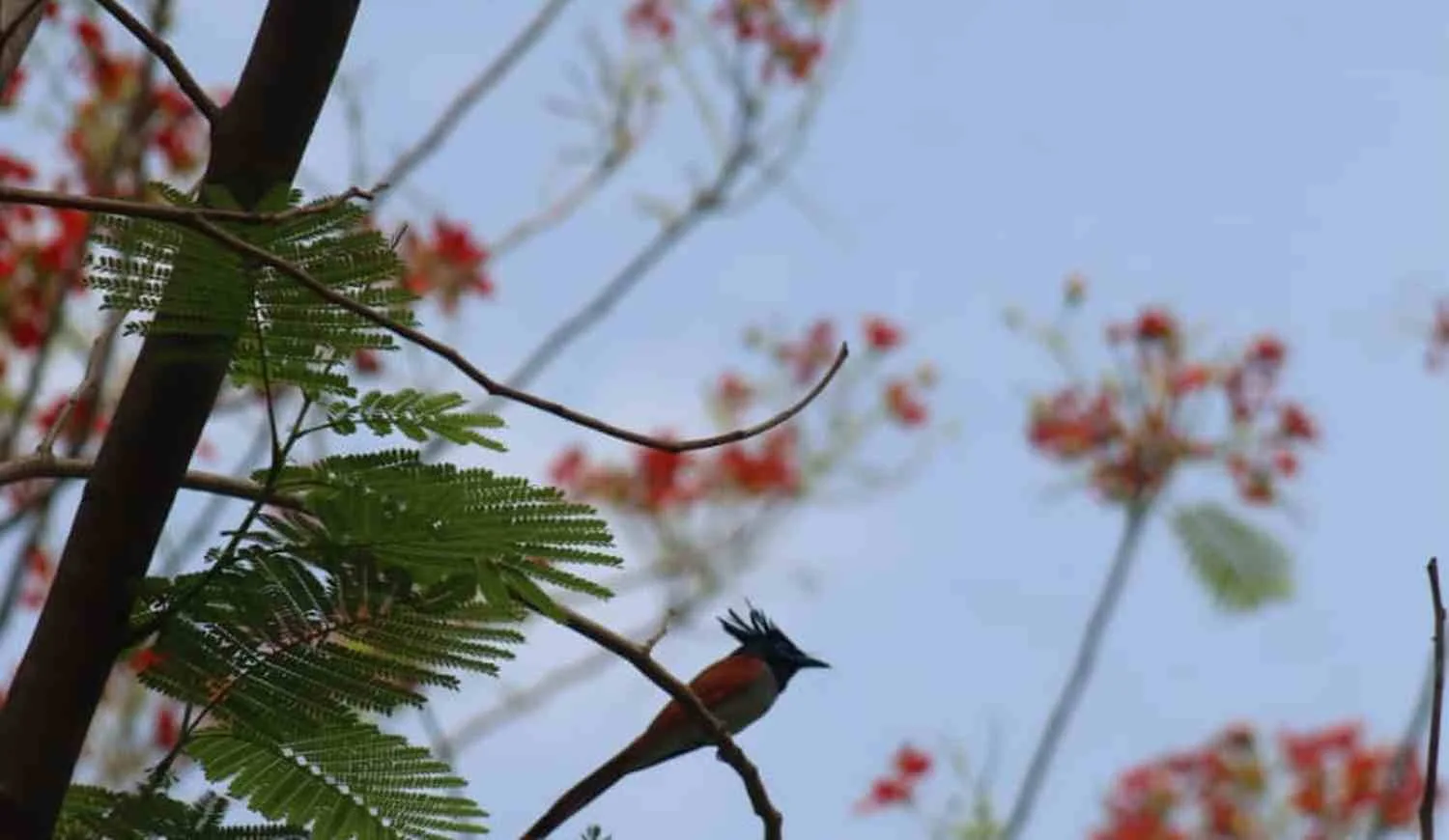
The state is home to the Indian Paradise Flycatcher (Terpsiphone paradisi), which was declared the state bird of Madhya Pradesh in 2001. Locally called "Dudhraj" (meaning "milk king" in Hindi), the male's flowing white tail streamers can reach 30 centimetres — making it one of the most breathtaking sights in Indian birding.
What makes birdwatching in Central India particularly rewarding is the diversity of ecosystems within short distances. Dry deciduous forests transition into riverine habitats, rocky outcrops give way to wetlands, and bamboo thickets border open grasslands. Each microhabitat attracts different species, which means a single morning walk can yield surprisingly varied sightings.
Getting to Know Ratapani: The Birder's Base Camp
Ratapani Tiger Reserve, located in the Raisen district of Madhya Pradesh, covers approximately 1,271 square kilometres. While the reserve has recently gained attention for its tiger population (it was officially declared Madhya Pradesh's eighth tiger reserve in December 2024), seasoned naturalists have long known it as a quiet paradise for birdwatching.
What Makes Ratapani Special for Birds?
The forest's landscape creates perfect conditions for avian diversity:
Teak-dominated dry deciduous forests that attract woodpeckers, orioles, and drongos
The Barna and Ratapani reservoirs that serve as winter feeding grounds for migratory waterfowl
Rocky plateaus and cliffs where vultures roost and raptors nest
Seasonal streams and water pools that become congregation points during summer months
According to surveys conducted in the region, Ratapani holds 33 of the 59 bird species identified by BirdLife International as significant for the area. The sanctuary has recorded over 210 bird species, spanning 53 families — from egrets and storks to eagles and falcons.
The wetlands near Barna Reservoir alone attract enough migratory waterfowl that the total population easily exceeds 20,000 birds during peak winter months.
The Birds You're Most Likely to Spot
If you're new to birdwatching, Ratapani offers plenty of "easy wins" — species that are relatively common but still thrilling to observe:
Commonly Sighted Species:
Indian Roller (with its stunning blue wings)
Coppersmith Barbet (listen for its repetitive metallic call)
Black Drongo (often seen perched on open branches)
White-throated Kingfisher (near water bodies)
Red-wattled Lapwing (unmistakable alarm calls)
Jungle Babbler (always in noisy groups of seven)
Species Worth Watching For:
Indian Paradise Flycatcher (the star of Madhya Pradesh birding)
Crested Hawk-Eagle
Malabar Pied Hornbill
Oriental White-backed Vulture
Painted Stork
Grey-headed Fish Eagle
Best Time for Birdwatching in Central India
Timing matters enormously when planning a birding trip. Here's what you need to know:
October to March is considered the ideal window for birdwatching in Central India. During these months, the weather is pleasant, resident birds are active, and migratory species arrive from Central Asia and Siberia to escape harsh winters.
Season-by-Season Breakdown
October - November: Early winter brings the first wave of migrants. The forests are green from recent monsoons, and birds are actively foraging. Excellent time for spotting warblers and flycatchers.
December - February: Peak birding season. Waterfowl numbers at reservoirs reach their highest. Mornings can be chilly, but the light is excellent for photography.
March - April: Resident birds begin breeding. This is when you're most likely to see the Indian Paradise Flycatcher in its full breeding plumage, with males displaying those extraordinary tail streamers.
May - June: Hot weather limits midday activity, but dawn walks can still be productive. Summer concentrates birds around remaining water sources — an advantage for focused watching.
July - September: Monsoon season. Most national parks and reserves close during this period. While the forest regenerates, birding is impractical.
Essential Gear for Beginner Birdwatchers
You don't need expensive equipment to start birdwatching, but a few basics will significantly enhance your experience.
What to Bring
Binoculars: This is your most important investment. For beginners, 8x42 binoculars offer a good balance between magnification and field of view. Brands like Nikon, Bushnell, or even budget options from Celestron work well for starters.
Field Guide: Carry a bird identification book specific to India. "Birds of the Indian Subcontinent" by Richard Grimmett is considered the birder's bible, though mobile apps like Merlin Bird ID and eBird can supplement your identification efforts.
Notebook and Pencil: Record what you see as it happens. Note the location, time, weather, and any distinctive behaviours. These details help with identification later and build your personal birding log.
Comfortable Clothing: Wear muted, earth-toned colours — birds are sensitive to bright hues and sudden movements. Closed-toe shoes are essential for forest trails.
Basic Supplies: Sunscreen, insect repellent, a hat, and plenty of water. Forest walks are deceptively tiring under the Central Indian sun.
What You Don't Need (Yet)
Skip the expensive telephoto camera setup for now. Learning to observe with binoculars teaches you more about bird behaviour than trying to photograph everything. Once you're comfortable identifying species by sight and sound, photography becomes a natural next step.
How to Actually Watch Birds: Practical Tips
Birdwatching looks simple, but there's a technique to it. Here's what separates productive sessions from frustrating ones.
Start Early (Very Early)
The golden hours for birdwatching are the first two hours after sunrise. Birds are most active during this window — feeding, calling, and moving through the forest. In Central India, this means starting your walk around 5:30-6:00 AM during winter months.
Late afternoon (around 4:00 PM onwards) offers a second activity window as birds prepare to roost. The light during these hours is also ideal for observation.
Master the Art of Stillness
Birds are remarkably attuned to movement and noise. When you spot activity in a particular area, stop walking. Find a comfortable position and wait. More birds reveal themselves when you're patient than when you're actively searching.
The "freezing technique" is something experienced birders use instinctively: when you notice movement in your peripheral vision, freeze completely. Slowly raise your binoculars only after the bird settles.
Listen Before You Look
In dense forests, you'll often hear birds long before you see them. Learning common calls dramatically improves your success rate. The Coppersmith Barbet's repetitive "tuk-tuk-tuk" sound, the Asian Koel's rising call, the Jungle Babbler's chattering — these become your audio guides through the forest.
Many birders report that closing their eyes for a minute upon entering a new area helps them tune into the soundscape before scanning with binoculars.
Know Where to Look
Different birds occupy different vertical zones:
Ground level: Partridges, francolins, lapwings
Understory (1-3 metres): Babblers, prinias, robins
Mid-canopy (3-10 metres): Flycatchers, orioles, woodpeckers
Upper canopy: Hornbills, drongos, eagles
Water bodies attract waders, ducks, and kingfishers. Forest edges — where open areas meet dense trees — are particularly productive, as many species forage along these transitional zones.
Experiencing Birdwatching at Ratapani: A Sample Itinerary
Here's what a productive birding day might look like if you're staying near the Ratapani forests:
5:30 AM - Wake Up Call The forest comes alive before sunrise. Have a quick cup of tea and head out while the light is still grey.
6:00 - 9:00 AM - Morning Walk Walk slowly along established trails, stopping frequently. The first three hours are your most productive window. Focus on listening and observing rather than covering distance.
9:00 - 10:00 AM - Breakfast Break Return for a hearty breakfast. Compare notes, check your field guide for any unidentified sightings.
10:00 AM - 4:00 PM - Rest Period During the heat of the day, most birds rest in shaded areas and are difficult to spot. Use this time for relaxation, swimming, or exploring nearby heritage sites like Bhimbetka.
4:00 - 6:30 PM - Evening Session Head back to the forest trails. Late afternoon light creates beautiful conditions for both observation and photography. Watch for raptors returning to roosts.
7:00 PM onwards - Reflection Update your bird log. Share stories with fellow nature enthusiasts. The camaraderie around birding discoveries is part of what makes the hobby so rewarding.
Ethical Birdwatching: The Rules Every Birder Should Follow
As birdwatching grows in popularity across India, responsible practices become essential.
Keep Your Distance: Never approach birds too closely, especially during breeding season. Use binoculars rather than walking toward a bird for a better view.
Stay on Trails: Venturing off designated paths damages habitat and disturbs ground-nesting species.
Avoid Playback: Playing recorded bird calls to attract species might seem harmless, but it stresses birds and can disrupt territorial behaviour. In breeding season, it's particularly harmful.
Never Disturb Nests: If you discover a nest, observe from a distance and leave the area quietly. Any intrusion can cause parents to abandon eggs or chicks.
Leave No Trace: Pack out everything you bring in. Even organic waste like fruit peels can attract scavengers and alter local ecology.
Learning from the Experts: The Value of Guided Walks
If you're serious about improving your birding skills, consider walking with a knowledgeable naturalist. At Madhuban Eco Retreat, our resident naturalist Shibajee leads guided birdwatching sessions through the surrounding Ratapani forests.
A good guide doesn't just point out species — they teach you to read the forest. Why are those mynas suddenly alarm-calling? What does that particular woodpecker drumming pattern indicate? Why do certain birds always appear together? These insights transform birdwatching from species-collecting into genuine ecological understanding.
Guided walks are particularly valuable for beginners because they compress the learning curve. Skills that might take years to develop independently can be picked up in a few focused sessions with an expert.
Beyond Birds: What Else You Might Encounter
One of the joys of birdwatching in wild forests is the unexpected wildlife sightings that come along.
In Ratapani's forests, it's not unusual to spot:
Chital (Spotted Deer): Often seen in groups at forest edges
Nilgai: India's largest antelope, surprisingly common
Langur Monkeys: Their alarm calls often alert you to predator presence
Wild Boar: Usually glimpsed crossing trails at dawn
Sloth Bear: Rare but possible, particularly in rocky areas
Leopard: Ratapani has a healthy population, though sightings require luck
And yes, tigers. While birdwatching, you're walking through legitimate tiger territory. This adds a certain thrill to dawn walks that few other birding destinations can match.
Where to Stay for Ratapani Birdwatching
Your accommodation choice significantly impacts your birding experience. Staying close to the forest means earlier starts and later finishes — crucial for maximising productive hours.
Madhuban Eco Retreat sits at the edge of Ratapani Wildlife Sanctuary, offering direct access to prime birding habitat. Over 70 bird species have been recorded on the property itself, including Paradise Flycatchers, Oriental Magpie-Robins, Golden Orioles, and several kingfisher species.
The retreat's eco-friendly philosophy aligns naturally with birding ethics. Vegetarian, locally-sourced meals fuel early morning walks without the heaviness of elaborate breakfasts. The absence of alcohol keeps evenings focused and mornings clear-headed. And the quiet, sustainable approach to hospitality means fewer disturbances to the surrounding wildlife.
Options range from glamping tents with forest views to traditional mud cottages inspired by local Gond tribal architecture — all designed to immerse you in the natural soundscape.
Planning Your Birdwatching Trip: Practical Details
Getting to Ratapani
By Air: Raja Bhoj Airport in Bhopal is the nearest airport, approximately 45 kilometres away. Regular flights connect Bhopal with Delhi, Mumbai, and other major cities.
By Rail: Bhopal Junction is well-connected to cities across India. From the station, Ratapani is about 60 kilometres by road.
By Road: The drive from Bhopal takes approximately 1.5 hours through scenic rural landscapes. The route passes near Bhimbetka, making it easy to combine historical exploration with your wildlife visit.
Safari and Entry Information
Ratapani Tiger Reserve offers jeep safaris accompanied by trained forest guides. Current safari timings:
Morning Safari: 6:00 AM – 9:30 AM
Evening Safari: 3:00 PM – 6:00 PM
Entry fees are nominal compared to more touristy reserves (approximately ₹250 per person for Indian visitors). Safari bookings can be made through the Madhya Pradesh Forest Department or at local forest offices near Delawadi.
What to Budget
A 2-3 day birdwatching trip to Ratapani, including comfortable eco-resort accommodation, meals, and guided walks, can be done for ₹8,000-15,000 per person depending on room category and safari inclusions.
There's something deeply calming about birdwatching. It forces you to slow down, to notice, to be present in ways that modern life rarely demands. The forests of Ratapani offer this gift abundantly — if you're willing to receive it. You don't need to be an expert to begin. You don't need expensive gear. You just need curiosity and a willingness to wake up early. The Dudhraj — that ghostly white flycatcher with the impossibly long tail — is out there somewhere in the teak forests right now, catching insects mid-flight, building nests, living its ancient life. All you have to do is go looking. Planning a birdwatching getaway near Bhopal? Madhuban Eco Retreat offers guided birding walks, comfortable eco-friendly stays, and direct access to Ratapani's forests. Contact us to plan your visit. Related Reading: Ratapani Tiger Reserve: A Slow Tourism Destination Near Bhopal Bhimbetika: India's Ancient Rock Art Wonder — The Complete Guide References:Your Birdwatching Journey Starts Here