There are moments in nature that leave us speechless and one such moment is unfolding right now at Madhuban Eco Retreat, nestled beside the forests of Ratapani Tiger Reserve. Known for its rich biodiversity and peaceful natural surroundings, this eco-retreat has become a chosen nesting ground for one of India's most elegant birds: the Indian Paradise Flycatcher, the magnificent State Bird of Madhya Pradesh.
Indian Paradise Flycatchers Choose Madhuban's Bamboo Grove for Nesting
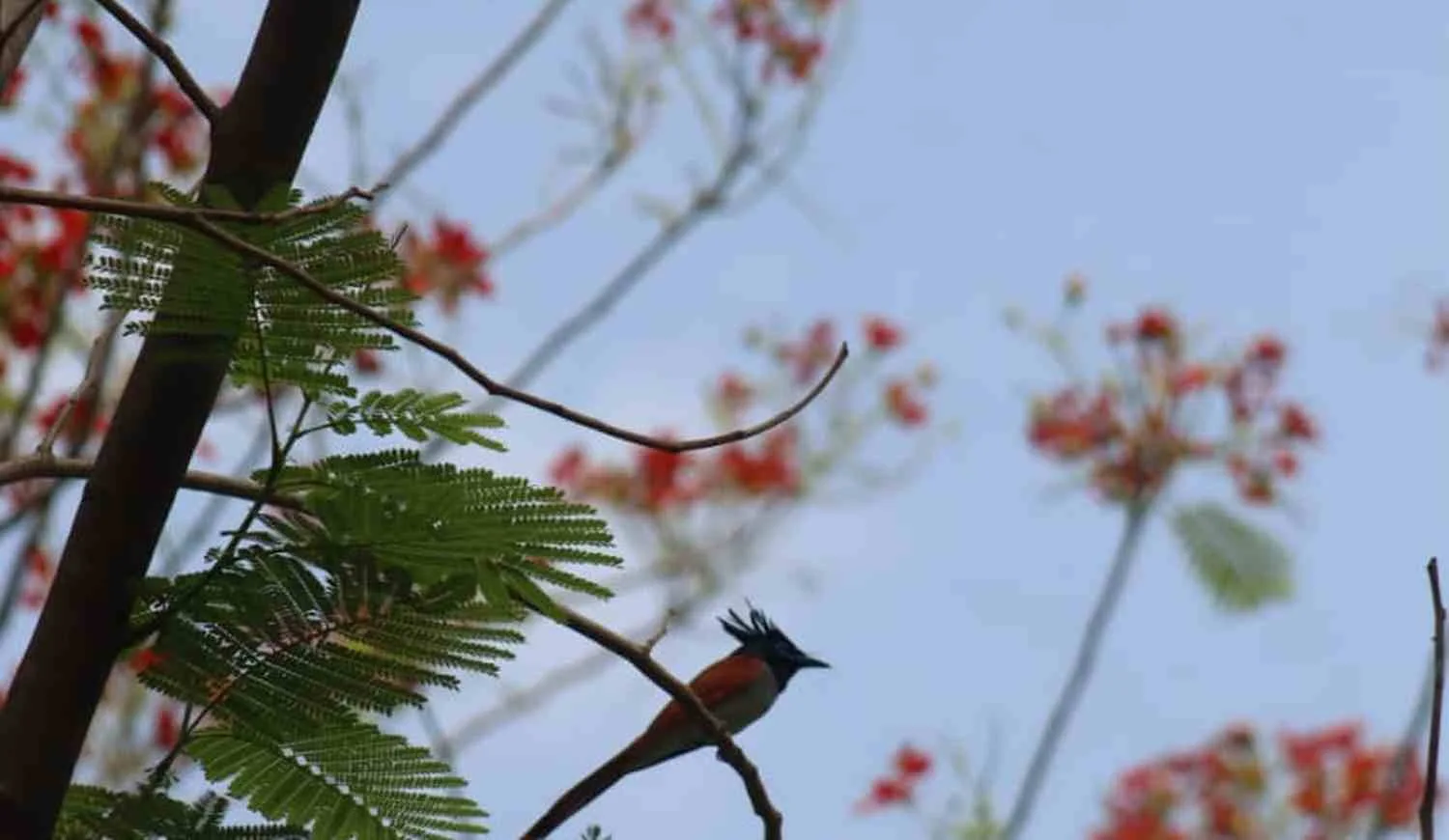
Our serene poolside bamboo grove has become the nesting site for the Indian Paradise Flycatcher this breeding season. Around 4–5 pairs of these enchanting birds have arrived to build their nests among the bamboo.
Their presence is more than beautiful it is a powerful sign that Madhuban Eco Retreat offers a safe, healthy, and undisturbed habitat where wildlife can genuinely thrive.
Watching the Female Indian Paradise Flycatcher Build Her Nest
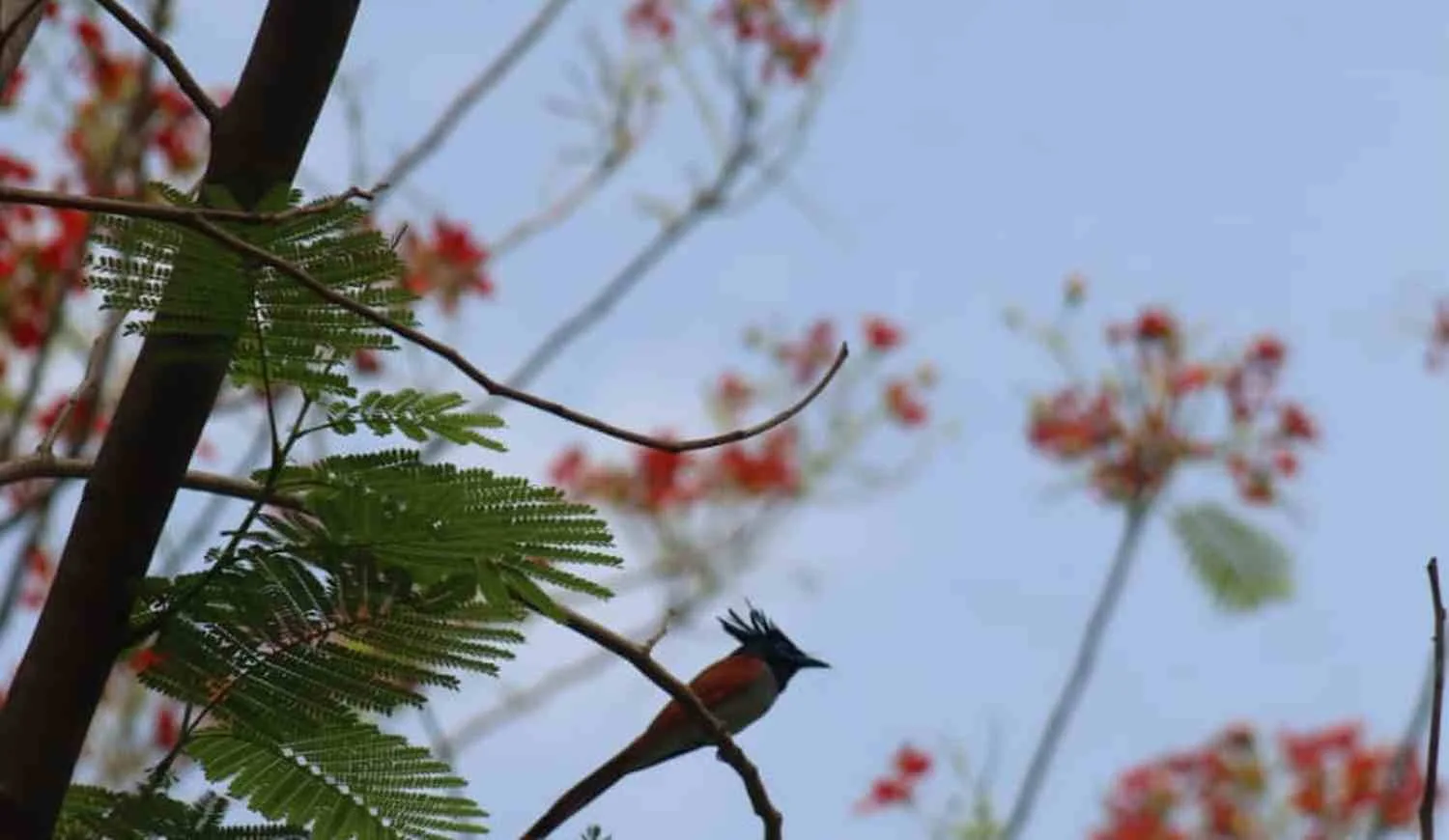
The bird captured in this sighting is a female Indian Paradise Flycatcher, patiently weaving her delicate cup-shaped nest. With incredible precision, she uses fine grass, plant fibres, and spider silk to create a secure home for her future chicks.
Nest-building is a shared effort. Both the male and female take part, tirelessly collecting materials and guarding their new home together true to the species' reputation as devoted, monogamous partners through the breeding season.
From Rufous-Orange to Snow-White: The Male's Remarkable Transformation
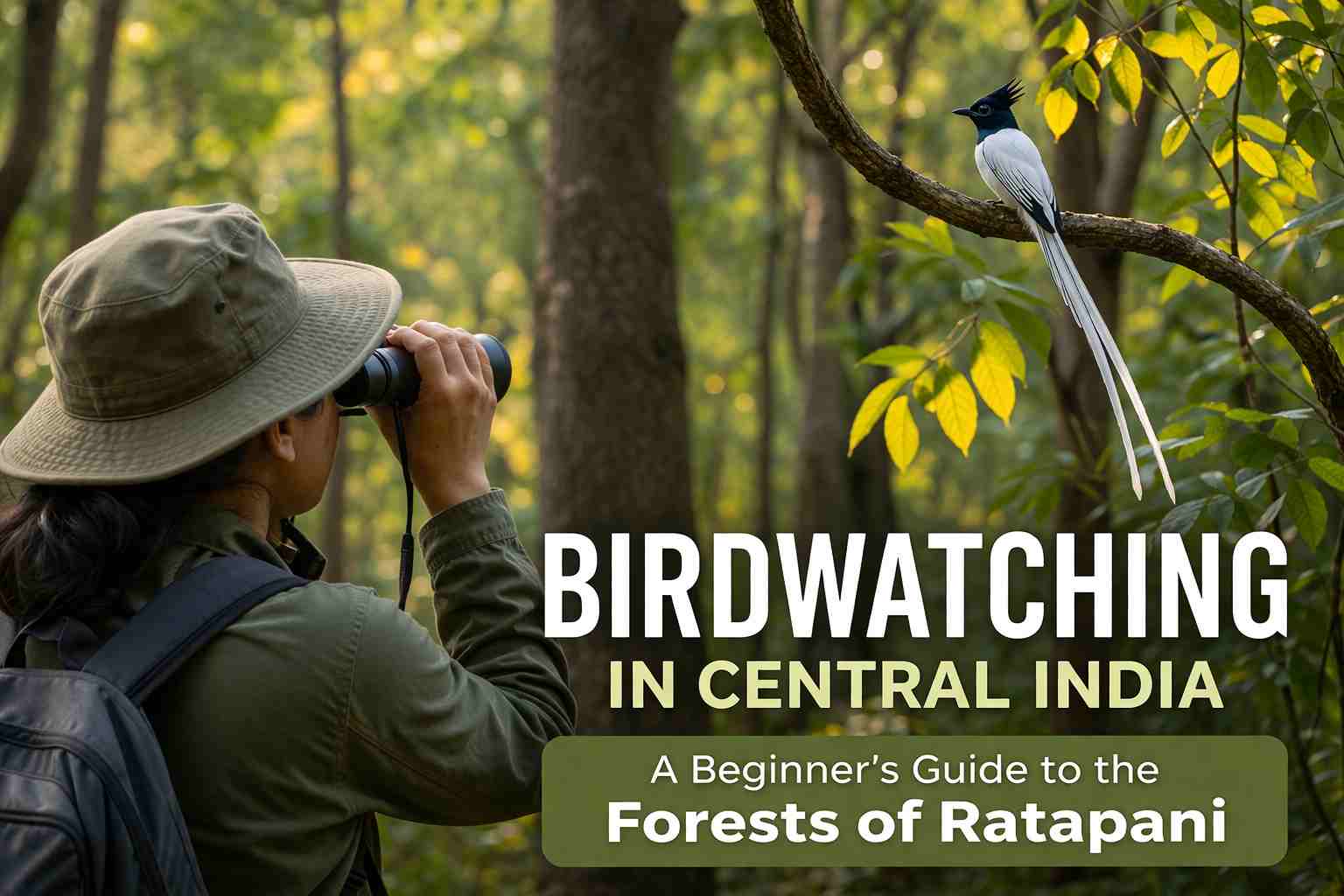
Her partner is currently a young male, displaying a striking rufous-orange plumage. But nature has an even more spectacular surprise in store. Over the next few years, as he matures, he will transform into one of the world's most breathtaking birds his body turning snow-white, his graceful tail feathers growing long and ribbon-like, his head shining with a glossy blackish-blue crown, and a brilliant electric-blue eye ring completing his regal appearance.
Watching this transformation unfold is like witnessing nature paint a masterpiece, one breeding season at a time.
Why This Sighting Matters for Wildlife Conservation at Ratapani
For us at Madhuban Eco Retreat, this is more than a bird sighting it is a celebration of biodiversity, conservation, and coexistence. Every nest built here is a reminder that when we protect nature, nature rewards us with extraordinary moments.
As these beautiful Paradise Flycatchers begin a new chapter of life in our bamboo grove, we're committed to giving them the peace and protection they deserve. Together, we can help preserve this natural paradise for generations to come.
Because when Paradise chooses Madhuban, it becomes our responsibility to protect its home.