Wildlife sightings that happen in an instant are forgotten just as quickly. Others quietly become part of your life testing your patience, sharpening your instincts, and reminding you that nature reveals its greatest treasures only when it chooses to. My encounter with the Mottled Wood Owl (Strix ocellata) belongs firmly to the second kind.
First Encounter With the Mottled Wood Owl at Ratapani Tiger Reserve
The story began in the winter of December 2021, shortly after I joined Madhuban Eco Retreat in Ratapani Tiger Reserve, Madhya Pradesh. One quiet evening, under a sky with only a handful of stars, I heard a deep, resonating call echo through the campus. Curious and excited, I followed the sound and, for the very first time, laid eyes on a magnificent Mottled Wood Owl perched silently in the darkness.
Like every wildlife enthusiast who stumbles upon a dream sighting, my first instinct was to capture the moment. Unfortunately, my camera was back in my room. By the time I rushed back, grabbed it, and returned, the owl had vanished into the forest leaving behind nothing but its haunting call and a memory that stayed with me.
That night marked the beginning of a pursuit that would continue for nearly five years.
Years of Near-Misses: Chasing a Glimpse of the Mottled Wood Owl
During my time at Madhuban, I encountered these elusive owls several times. Sometimes I heard their unmistakable calls from the edge of the forest; sometimes I caught a fleeting glimpse of one gliding silently between trees; occasionally I spotted one perched high in the canopy. Yet every encounter ended the same way the light too poor, the distance too great, or the owl gone before I could raise my camera.
In 2022, my junior naturalist, Arijit Das, managed to photograph one perched gracefully atop a towering Semal tree (Bombax ceiba). I was genuinely happy for him, but deep inside I still hoped fortune would one day smile on me too.
Breaking the Myth: Local Beliefs About Owl Sightings in India
There was another reason I kept these sightings discreet during my early years at Madhuban.
Most of our local staff come from villages bordering the forest. Like many rural communities across India, some had grown up believing that seeing an owl was a bad omen. I was hesitant to reveal the birds' exact locations, worried that age-old superstitions might unintentionally put them at risk.
Over time, that changed. Working together every day discussing the forest and its inhabitants, running nature walks, and sharing stories gradually built trust. Conversations replaced misconceptions. The staff came to understand that owls are not symbols of misfortune but remarkable predators that help maintain ecological balance by controlling rodent populations and supporting a healthy forest ecosystem.
For me, that shift in perception has been one of the most meaningful achievements of my years at Madhuban. Conservation is not only about protecting wildlife; it is equally about nurturing respect and understanding among the people who share the landscape with it.
14th June 2026: The Mottled Wood Owl Sighting I Waited Five Years For
Then came 14th June 2026 a date I will never forget.
It had been one of those exhausting days that seemed to stretch endlessly. After finishing what felt like a mountain of work, I finally returned to my room in the staff quarters, hoping for a few hours of uninterrupted sleep.
Barely thirty minutes later, the silence of the night was broken.
"Hoo...hoo..."
The unmistakable call of a Mottled Wood Owl. This time, incredibly close.
Without wasting a second, I grabbed my torch and camera and rushed outside. I have never considered myself a great photographer. Wildlife photography is challenging enough, and night photography has always felt almost impossible to me. But opportunities like these don't wait for perfect photographers.
I called out to my trainee naturalist, Anup Mourya, and together we began tracking the direction of the calls. A few local staff members, still awake at that hour, joined us too.
For nearly twenty minutes we followed the sounds through the quiet campus, listening, stopping, and listening again. Finally, our search came to an end.
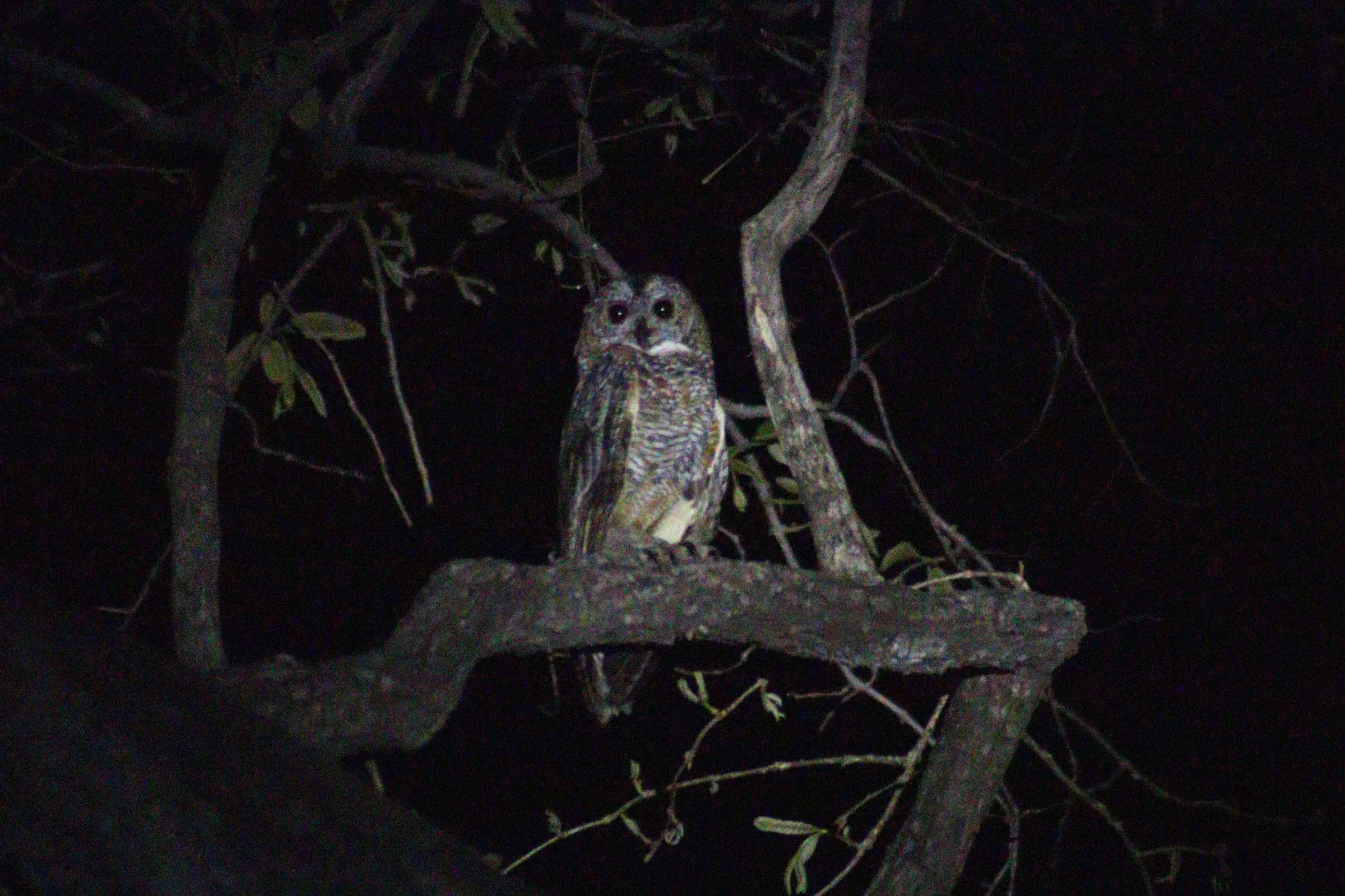
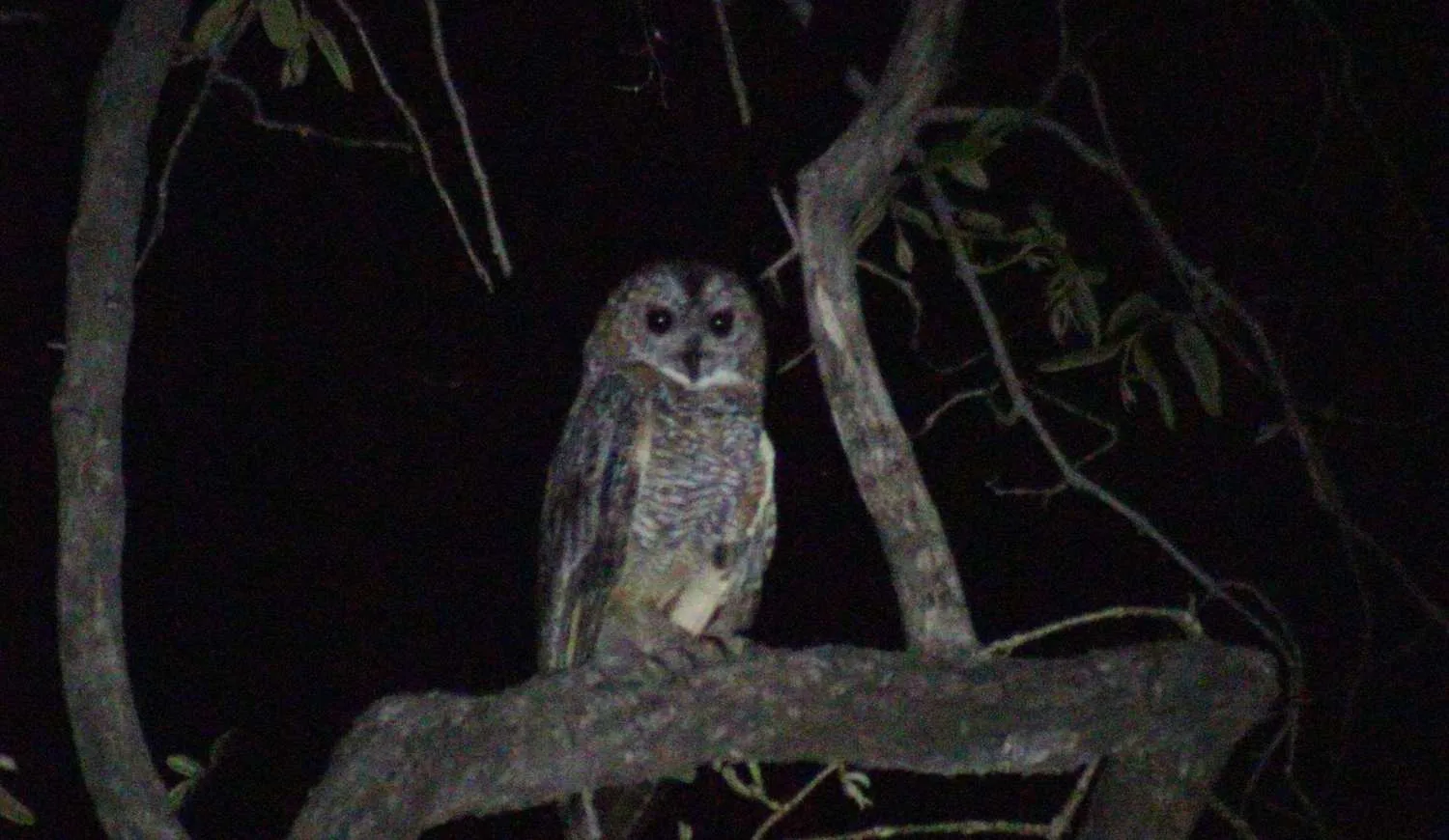
High above us, perched on the branch of a large Saaj/ Crocodile Bark Tree (Terminalia tomentosa), sat the owl we had been searching for. Moments later, another owl answered from nearby, creating a magical duet that echoed through the darkness, the classic call that helps identify this species in the wild.
The forest suddenly felt alive.
With patience and after several failed attempts I finally managed to capture a few photographs. They were far from perfect; the lighting was difficult, the distance challenging, and my skills certainly had room for improvement. But none of that mattered.
Those photographs represented something much greater than technical perfection. They were the culmination of five years of waiting, countless missed opportunities, and an enduring hope that the forest would one day grant me this moment.
We watched the pair quietly for nearly twenty minutes, careful not to disturb them, before walking back to our quarters under the calm June sky camera in hand and a smile I couldn't hide.
What This Journey Taught Me About Wildlife Photography
I realized that wildlife photography is never just about collecting beautiful images. It is about patience, persistence, respect, and accepting that nature owes us nothing.
Sometimes, the greatest reward is not the photograph itself, but the journey it took to earn it. And on that memorable June night, the forest finally decided it was my turn.
Article Written on - 15 July 2026