There are some forests that you visit for the animals you hope to see. And then there are forests that make you slow down enough to notice the things you would otherwise walk past.
For me, Ratapani has always been one of those forests.
Now known as Ratapani Tiger Reserve, this landscape near Bhopal is often spoken about in terms of tigers, leopards, sloth bears, teak forests and its growing importance as a wildlife destination. But there is another world moving quietly through the forest, one that weighs almost nothing, makes no sound and can easily be missed if you are walking too fast.
The world of butterflies.
Perhaps one of the most beautiful ways to experience the butterflies of Ratapani Tiger Reserve is to slow down and take a walk around the Saru Maru landscape, one of the most rewarding routes for hiking near Bhopal. Madhuban Eco Retreat makes a good base for exploring the forest, streams, rocky trails and the small details of life that make this landscape so special.
This is not a story about ticking species off a checklist. It is about walking. Watching. Waiting. And discovering that a tiger reserve is not only about the tiger.
A Different Way of Entering Ratapani
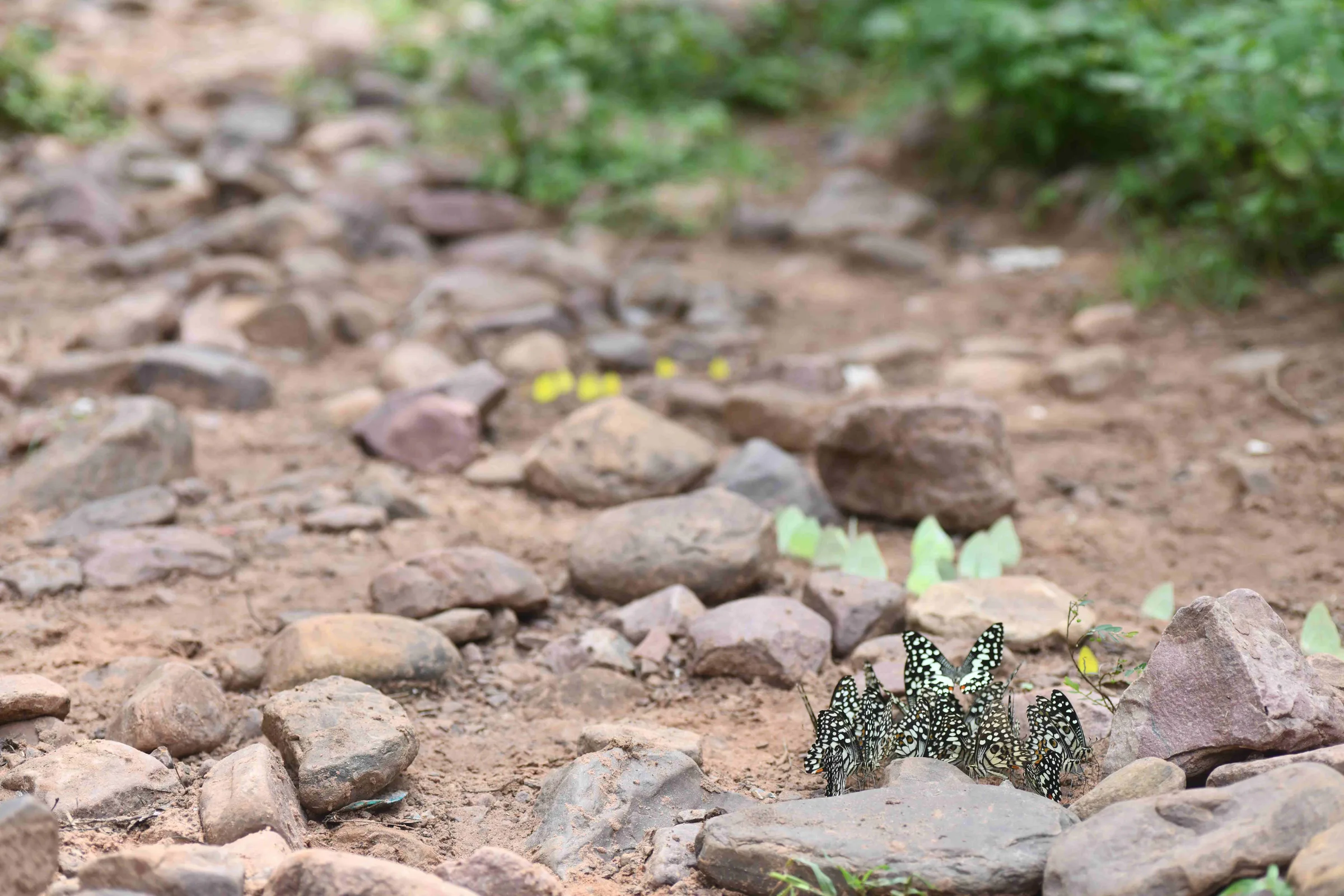
Picture Credit - Kriti Jain
My journey into this landscape began at Madhuban Eco Retreat. Madhuban sits within the larger Ratapani landscape, surrounded by forest, rocky terrain and the seasonal changes that completely transform Central India's dry deciduous forests.
From the property, the forest does not feel like something separate. It begins slowly. A teak tree here. A patch of grass there. A small flowering plant attracting a few insects. A seasonal stream that changes character with the weather.
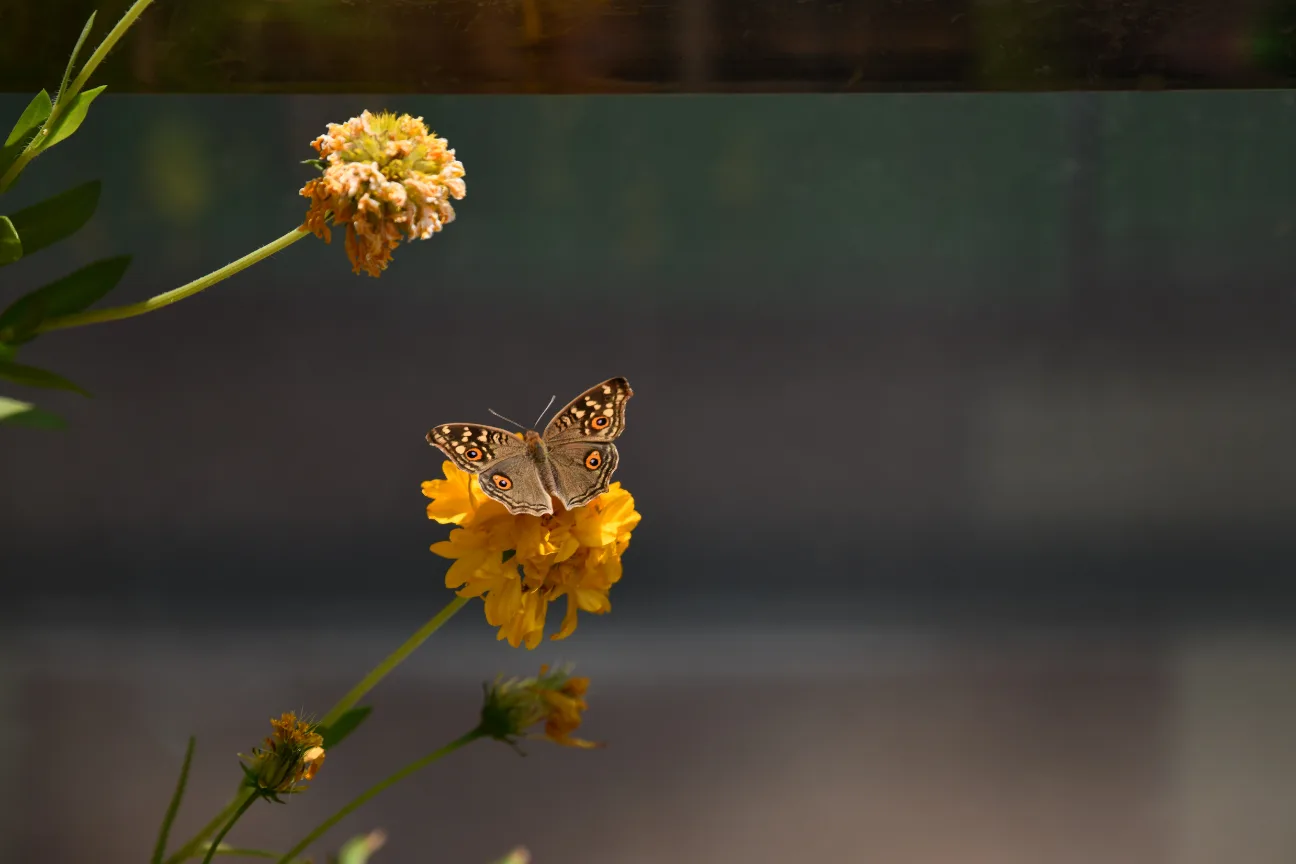
And then, if you stop looking at the big picture, you begin to notice the tiny things. A butterfly flying across the trail. Another sitting with its wings open in the morning sun. A Common Grass Yellow disappearing into the vegetation. A blue tiger butterfly flashing between two plants before vanishing completely.
This is how I like to experience Ratapani. Not by asking, "What will I see today?" But by asking, "What will the forest show me today?"
Ratapani Tiger Reserve Butterflies: The Forest's Quieter Side
When people hear the words Ratapani Tiger Reserve, their minds naturally go to the larger mammals. That is understandable. But spend a little time looking down at the flowers, shrubs and forest edges, and another story begins to unfold.
Butterflies are everywhere in a healthy forest landscape. They are pollinators. They are prey for other animals. Their caterpillars depend on particular plants. Some species need open patches, some prefer forest edges, some are attracted to flowering plants, while others gather around moist soil to obtain minerals.
In other words, butterflies are not simply visitors to the forest. They are part of the forest.
Ratapani has already demonstrated just how interesting this smaller world can be. A scientific butterfly survey conducted in Ratapani Wildlife Sanctuary in September 2021 recorded 104 butterfly species belonging to six families. The survey covered 74 trails across four ranges and recorded more than 15,000 individual butterflies.
That number stayed with me. Because 104 species means that there is another Ratapani waiting to be explored, one that you cannot experience from a safari vehicle.
You have to walk.
Walking Towards Saru Maru: A Forest Hike Near Bhopal
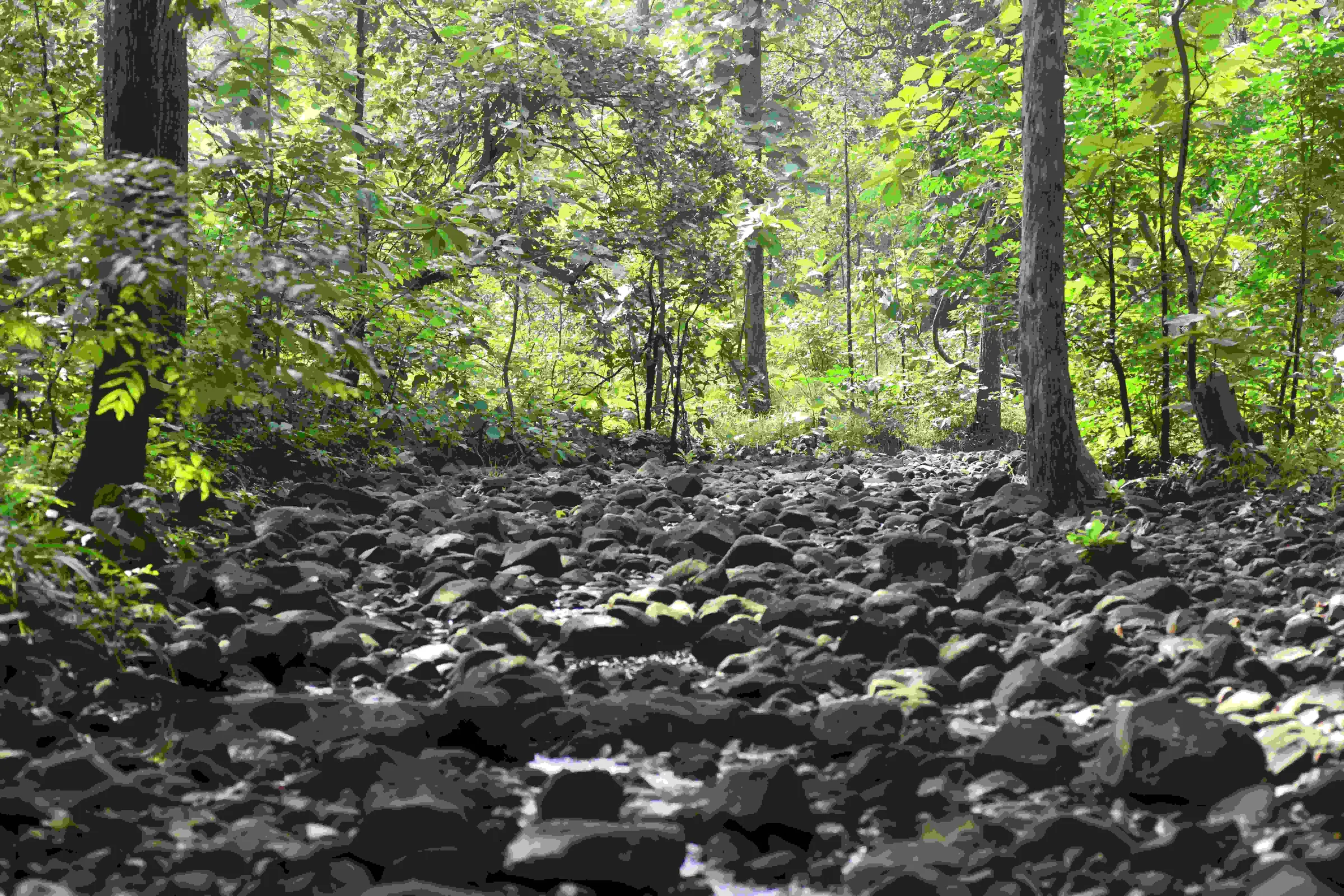
The walk towards Saru Maru is not the kind of trail where you should be in a hurry. The landscape changes as you move. Teak trees rise around you, and patches of sunlight fall through the canopy. In places, the trail opens up. In others, vegetation closes in around you.
During my trek, I noticed the forest floor changing from one patch to another. There were green stones and exposed rocks along the way. Seasonal water channels showed where water moves through the landscape during the monsoon. Small pools and water bodies created their own little ecosystems. We even came across small crabs and tiny fish in the water.
And then there were spiders. Insects. Birds. Tracks on the forest floor. The occasional sign that something much larger had passed through before us.
I remember seeing tiger pugmarks during the trek. For a moment, the entire mood of the forest changed. You suddenly become aware that you are walking through a landscape that belongs to animals much larger than you.
But what I found equally fascinating was that, only a few metres away, life was continuing at an entirely different scale. A butterfly was feeding on a flower. A spider was waiting patiently on its web. A caterpillar was probably hidden somewhere among the leaves.
The forest was busy. We were simply learning how to notice it.
Look Beyond the Tiger
One of the things I love most about butterflies is that they change the way you walk through a forest. When you are looking for a tiger, you look far ahead. When you are looking for butterflies, you look everywhere.
You look at the canopy. Then the shrub layer. Then the flowers. Then a patch of damp soil. Then a leaf. Then another leaf.
Sometimes you stop because something moves. Sometimes you stop because something doesn't. And sometimes you walk past a butterfly completely, only to realise a few seconds later that there was something beautiful sitting beside you.
That is the charm of butterfly watching. There is no guarantee. There is no schedule. And there is no dramatic soundtrack. You simply have to be present.
Ratapani's Butterfly Stories Are Hidden in Its Plants
A butterfly does not choose a forest randomly. Every butterfly has a relationship with plants. Adult butterflies may visit flowers for nectar, but their caterpillars can be much more particular.
This is why, when I look at a landscape from a butterfly conservation perspective, I don't simply ask, "How many butterflies are here?" I ask, "Why are they here?"
Where are they feeding? Where are they breeding? Which plants are they using? Where are the caterpillars? Where are the pupae? Where are they taking shelter? Which parts of the landscape are providing nectar? Which parts are providing host plants?
These questions make a butterfly walk much more interesting. You are no longer simply photographing butterflies. You are trying to understand their lives.
The Magic of a Forest Edge
One of my favourite places to look for butterflies is not necessarily deep inside the forest. It is often the edge: where forest meets an open patch, where sunlight meets shade, where flowering plants grow beside shrubs, where a seasonal stream crosses a trail.
These transition zones can be incredibly lively. During a walk around the Madhuban–Saru Maru landscape, these small changes in habitat become very noticeable. One moment you are walking under teak. A few minutes later, you reach a more open patch. The temperature feels different. The light is different. And suddenly there are butterflies.
This is why creating and protecting small habitat patches is so important. A butterfly does not need an enormous meadow to survive. Sometimes a patch of the right plants, connected to the larger landscape, can become an important feeding or breeding space.
Saru Maru: Where History Meets the Forest
And then comes Saru Maru. After walking through the forest, reaching the ancient caves and archaeological remains feels almost surreal.
The landscape suddenly connects two very different stories. One is the story of the forest. The other is the story of people who walked through this landscape centuries ago. Saru Maru is associated with an ancient Buddhist monastic complex, with caves, stupas and inscriptions from the time of Emperor Ashoka.
Standing there, surrounded by rocks, trees and silence, it is difficult not to think about how long this landscape has existed before us. The forest has changed. People have changed. The wildlife has changed. But the landscape continues to hold these layers of history.
Perhaps that is what makes the Saru Maru trek so special. It is not simply a trek to a historical site. It is a walk through a living landscape.
A Tiger Reserve Is More Than Its Tiger
Ratapani was officially notified as a tiger reserve in December 2024, becoming Madhya Pradesh's eighth tiger reserve and India's 57th. The reserve covers approximately 1,271.4 sq km, including a core area and a buffer area.
But when we talk about conserving a tiger reserve, we cannot think only about the tiger. A tiger needs prey. Prey needs vegetation. Vegetation needs pollinators and seed dispersers. Insects support birds, reptiles, amphibians and other animals. Streams, soil, trees, shrubs, grasses and microorganisms are all part of the same system.
Butterflies are one small, beautiful piece of this much larger ecological puzzle. That is why I believe the butterfly diversity of Ratapani deserves much more attention. The tiger may be the symbol of the reserve, but the butterfly can tell us something about the forest that the tiger cannot.
Butterflies of Ratapani Tiger Reserve to Look Out For
On a butterfly walk in Ratapani, you may encounter some of the familiar species of Central India: Common Grass Yellow, Common Emigrant, Lemon Pansy, Baronet, Common Lime, Zebra Blue and many others. The 2021 survey also recorded species such as Crimson Rose, Plum Judy, Double-branded Plum Judy, Common Short Silverline, Common Red Flash, Vindhyan Bob and Common Tree Brown.
But I would not recommend going into Ratapani with a checklist and trying to finish it. Instead, choose one butterfly and follow it. Watch where it lands. Look at the flower. Look at the surrounding plants. See whether another individual is nearby. Look for caterpillars. Look for eggs.
You might discover that one butterfly can lead you into an entire story about the forest.
The Joy of Slowing Down
There was a point during the Saru Maru trek when I realised that I was no longer walking with the same purpose with which I had started. Initially, there is always a destination. Saru Maru. The caves. The trail. The next point.
But somewhere along the way, the destination becomes less important. You stop for a butterfly. Then for a bird. Then for a strange-looking leaf. Then for a spider. Then because you suddenly notice the sound of water.
This is what I love about nature. It quietly changes your pace. And perhaps that is exactly what we need from wildlife tourism today. Not always more activities. Not always more infrastructure. Sometimes, simply more opportunities to slow down.
A Butterfly Experience at Madhuban Eco Retreat
This is also where I see an opportunity for Madhuban Eco Retreat best wildlife resort near Bhopal. A stay here does not have to be only about relaxing in a beautiful forest setting. It can become an opportunity to understand the landscape.
Imagine beginning the morning with a slow butterfly walk. Learning how to distinguish a host plant from a nectar plant. Watching butterflies around flowering patches. Searching for caterpillars. Walking towards the forest. Exploring the Saru Maru trail. Returning to the property and documenting what was seen.
And slowly, over time, creating a living butterfly map of the landscape. Which species are present? Which plants attract them? Which species breed here? Which months bring which butterflies? Where are the best butterfly patches? What changes after the monsoon? What happens during winter?
These are not just questions for researchers. They can become part of the visitor experience.
Come for the Forest, Stay for the Small Things
Perhaps the most beautiful thing about Ratapani is that it does not reveal everything at once. You may arrive hoping to see a tiger. You may see pugmarks instead. You may hope for a leopard. You may only hear something moving in the forest. You may walk towards Saru Maru thinking about history. And somewhere on the way, a tiny blue butterfly may completely change your attention.
That is Ratapani. It is not a forest that needs to constantly perform for you. It asks you to slow down enough to notice what is already happening.
Once you begin looking closely, you realise that the forest is full of stories. Some have paws. Some have feathers. Some have scales. And some have wings no bigger than your palm.
Tips for Butterfly Watching and Hiking Near Bhopal
If you are planning a visit to Ratapani Tiger Reserve near Bhopal, leave some time for the smaller stories.
Walk slowly.
Carry binoculars if you have them.
Keep a camera ready, but don't let it become the reason you miss what is happening around you.
Look at flowers and underneath leaves.
Watch the forest edges.
Look for puddling butterflies after rain.
Pay attention to seasonal streams.
If you take the Saru Maru trail from Madhuban Eco Retreat, give yourself enough time to stop. The best moment of the walk may not be the moment you reach Saru Maru. It might be the moment, somewhere along the trail, when a butterfly lands beside you and you realise that you have been walking through its world all along.
Ratapani is known as a tiger landscape. But walk slowly enough, and you will discover that it is also a landscape of butterflies. Perhaps that is one of the best ways to truly experience a forest: not by asking how much wildlife you can see, but by learning how much life is already there.